
Webster Technique
Pregnancy Chiropractor in Savannah and Pooler
A pelvis with room to change.
The Webster Technique is a gentle, specific adjustment for the pelvis and sacrum. It supports balance as the baby grows and is used by many Savannah and Pooler mothers who want comfort without forcing a position.
Dr. Samantha Brown specializes in prenatal and Webster Technique care. Schedule your $49 evaluation to meet with her and review your options.
- Webster-certified doctors for pelvic and sacral balance
- Care paced for pregnancy, not a standard adult visit

Start with clarity
Your first visit is a conversation, not a commitment.
Through pregnancy, not only at the end
Balance is the point. Position can follow.
Dr. Larry Webster observed that restoring pelvic balance often gave a breech or transverse baby room to turn head-down. The technique itself is about the mother’s biomechanics.

Pelvis · sacrum
Specific and gentle
Room in the pelvis as everything else shifts
We balance the pelvis and sacrum so the uterus and surrounding joints are not working against a twist. Many mothers also report less nausea and an easier time moving as pregnancy progresses.
- Low-back or pelvic pain that grows with the pregnancy
- Pain with walking, rolling in bed, or standing
- A history of pelvic imbalance before pregnancy
- Questions about breech or transverse presentation
Good to know: Webster Technique does not turn a baby by force. It balances the pelvis so there is room for a natural turn.
Your pattern may involve one — or several.
-
Growing load
The pelvis and low back carry more, and carry it differently, each month.
-
Pelvic twist
An unlevel sacrum changes how the uterus sits.
-
Nervous system
Less interference helps the body do the work it is already doing.
-
Before birth
Consistent care is associated with labors mothers describe as smoother.
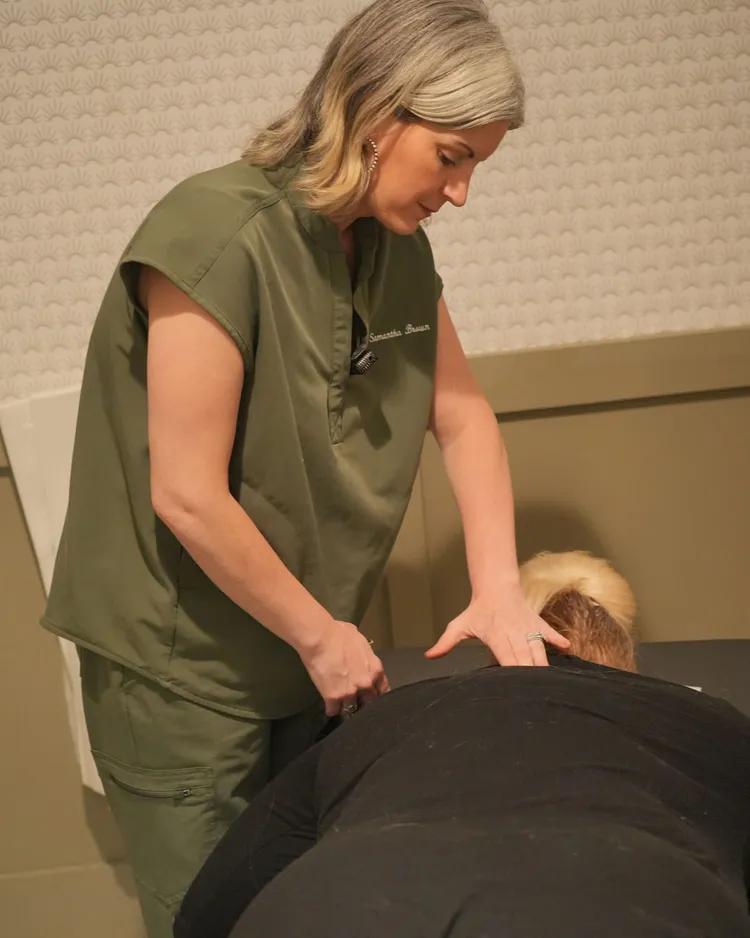
Care paced to your nervous system
Our root-cause approach
Comfort now. A clearer path later.
Adjustments stay gentle and specific. The aim through pregnancy is pelvic balance and flexibility. Mothers who stay consistent often describe shorter, smoother labors with better-timed contractions.
- Pressure is matched to pregnancy, never borrowed from a standard visit
- We talk about what Webster Technique does and does not do
- Comfort while walking and sleeping is part of the plan
A clear path forward
What care looks like
-
01
Listen & map
Your history, daily load, and what you want back come first. We do not start with a protocol.
-
02
Evaluate
Motion, orthopedic, and neurologic tests show what is irritated and what can wait.
-
03
Explain
Findings in plain language, including when imaging or another provider is the better next step.
-
04
Restore
Specific care, then movement you can repeat, with milestones you can see.
Built around real life
A plan you can understand — and follow
-
Specific chiropractic care
Adjustments and instrument work aimed at the joints and nerves the exam actually implicated.
-
Movement that makes sense
A short set of exercises tied to how you sit, lift, walk, or sleep — not a generic packet.
-
Progress you can see
We revisit the same measures so you know whether the plan is working.
No pressure. No long contracts. Just a clear next step.
Getting your life back is the outcome that matters.
“I could roll over in bed again. That alone changed the last trimester.”

-
Level
Pelvic balance
The point of Webster Technique
-
Ease
Daily movement
Walking, sleeping, standing
-
Birth
Preparation
Balance before labor, not a promise
Questions about pregnancy care
Is chiropractic care safe during pregnancy?
Webster Technique visits are gentle and specific to the pelvis and sacrum. Pressure is adapted for pregnancy. Tell us about your obstetric care so we stay coordinated with your provider.
Will I need X-rays or an MRI?
Imaging is used only when your history and exam indicate it. Many people start with a hands-on evaluation. X-rays or an MRI are recommended when we need a clearer look at structure or nerve involvement.
Can this turn a breech baby?
The technique balances the pelvis. It does not manually turn the baby. When balance is restored, some babies have room to move into a head-down position on their own.
Can I be seen during a flare-up?
Yes. A flare-up is a useful time to be seen, because we can compare how you move now with your baseline and adjust the plan. Call the office and we will do our best to see you promptly.
Do you accept insurance?
We offer a complimentary benefits check before care begins. Bring your insurance card, or send it ahead, and we will review coverage, deductibles, and auto-accident benefits when they apply. No services are rendered without your prior knowledge of your benefits.