
Knee and lower-chain care
Knee Pain Treatment in Savannah and Pooler
Stairs should not be a strategy.
The knee carries a large share of body weight, and small imbalances in the hip, back, or leg add stress over time. People usually notice it on stairs, after sitting, or partway through a walk.
Our doctors evaluate and treat this condition every day. Tap Dr. Jared , Dr. Samantha , or Dr. Bradlie , or schedule your $49 evaluation to get started.
- Knee motion checked with the hip, pelvis, and low back
- A plan for alignment, strength, and how you load the joint

Start with clarity
Your first visit is a conversation, not a commitment.
More than the joint you feel
The knee often pays for what is above it.
Repetitive strain, sport, work, and everyday wear all show up here. Swelling, tightness, and pain with bending are common once the pattern is established.

Knee · hip · pelvis
Shared load
Why the knee complains on the way up
We watch the knee bend, straighten, and bear weight, and we test whether muscle, ligament, or joint structure is involved. Nerve function, hip mobility, and pelvic alignment are part of the same visit.
- Discomfort during exercise or daily activity
- Swelling or tightness around the knee
- Pain bending or straightening the leg
- Trouble with stairs or longer walks
Good to know: correcting the movement pattern reduces stress the knee should not have been taking.
Your pattern may involve one — or several.
-
Gait
How the hip and pelvis move changes the line of the knee.
-
Training
Sport and exercise load a joint that may already be compensating.
-
Work stance
Standing, kneeling, and repetitive bends add up.
-
Nerve input
Leg strength and stability can reflect nerve irritation above.
Care paced to your nervous system
Our root-cause approach
Align the chain. Then strengthen the knee.
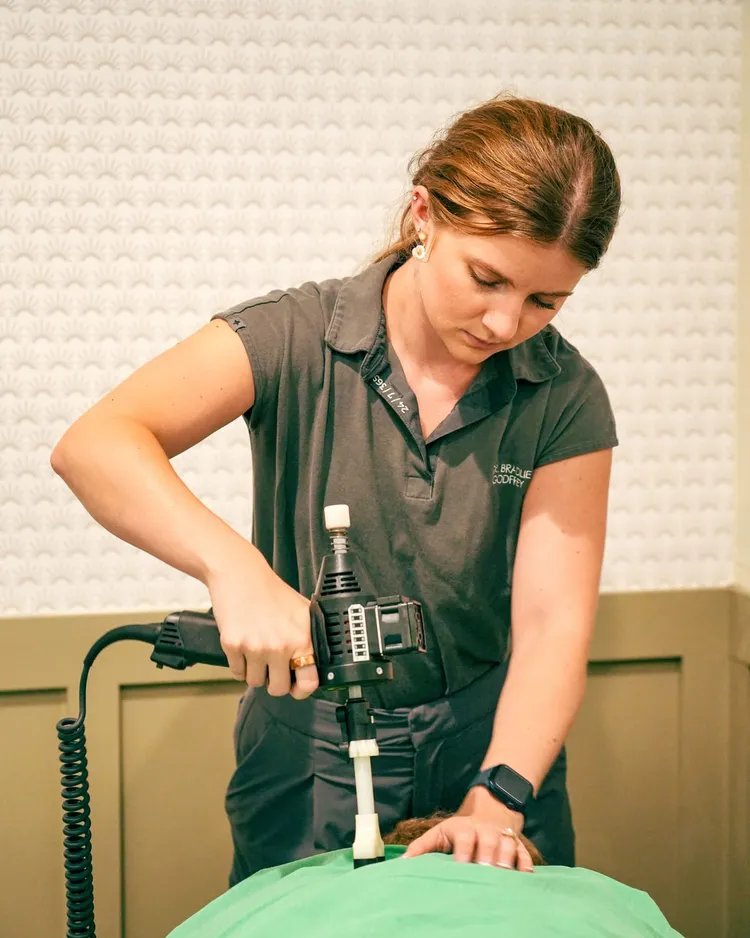
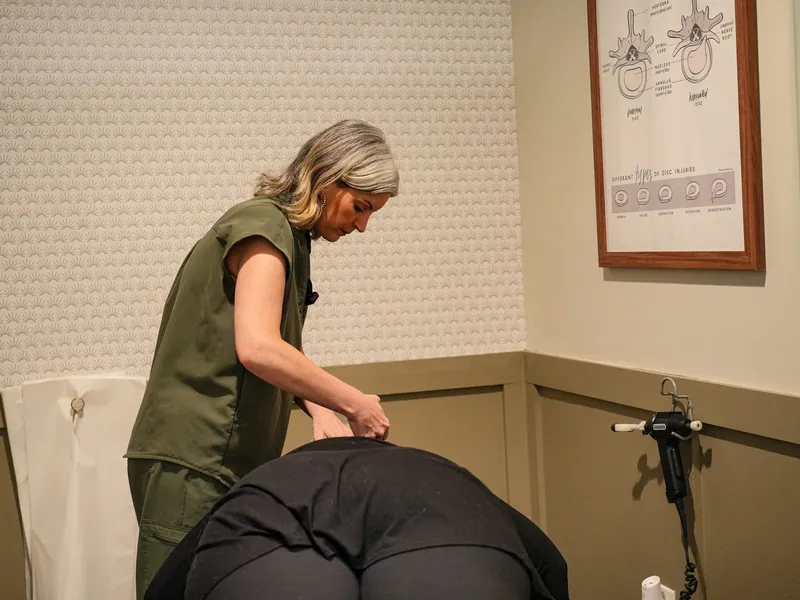
Adjustments to the spine, hips, and lower extremity improve how the joint lines up. Instrument care stays precise. Exercises build the muscles that keep the knee steady.
- The hip and low back are examined with the knee
- Strength work is specific, not a generic sheet
- Stairs and walking are the outcomes we track
A clear path forward
What care looks like
-
01
Listen & map
Your history, daily load, and what you want back come first. We do not start with a protocol.
-
02
Evaluate
Motion, orthopedic, and neurologic tests show what is irritated and what can wait.
-
03
Explain
Findings in plain language, including when imaging or another provider is the better next step.
-
04
Restore
Specific care, then movement you can repeat, with milestones you can see.
Built around real life
A plan you can understand — and follow
-
Specific chiropractic care
Adjustments and instrument work aimed at the joints and nerves the exam actually implicated.
-
Movement that makes sense
A short set of exercises tied to how you sit, lift, walk, or sleep — not a generic packet.
-
Progress you can see
We revisit the same measures so you know whether the plan is working.
No pressure. No long contracts. Just a clear next step.
Getting your life back is the outcome that matters.
“Stairs stopped being the thing I planned the day around.”
-
Stairs
Step-over-step
A practical test of the plan
-
Hip
Upstream motion
Where knee load often starts
-
Stable
Supporting strength
So the visit holds between appointments
Questions about knee pain
Why would a chiropractor look at my knee?
Knee load depends on the hip, pelvis, and low back. We evaluate that chain and the knee itself so treatment is not aimed at the wrong joint.
Will I need X-rays or an MRI?
Imaging is used only when your history and exam indicate it. Many people start with a hands-on evaluation. X-rays or an MRI are recommended when we need a clearer look at structure or nerve involvement.
Can I be seen during a flare-up?
Yes. A flare-up is a useful time to be seen, because we can compare how you move now with your baseline and adjust the plan. Call the office and we will do our best to see you promptly.
Do you accept insurance?
We offer a complimentary benefits check before care begins. Bring your insurance card, or send it ahead, and we will review coverage, deductibles, and auto-accident benefits when they apply. No services are rendered without your prior knowledge of your benefits.