
Thoracic spine care
Mid-Back Pain Treatment in Savannah and Pooler
Breathe and twist without bracing.
Pain between the shoulder blades often comes from long sitting, driving, and looking down. What starts as tension can become stiffness that shows up when you twist, reach, or take a deep breath.
Our doctors evaluate and treat this condition every day. Tap Dr. Jared , Dr. Samantha , or Dr. Bradlie , or schedule your $49 evaluation to get started.
- Thoracic motion checked in twist, bend, and reach
- Adjustments plus posture habits from the workday

Start with clarity
Your first visit is a conversation, not a commitment.
Between the shoulder blades
Desk load lives in the mid back.
The thoracic spine anchors the rib cage. When it stiffens, the neck and low back compensate, and a deep breath can feel tight.
Thoracic spine
Ribs and posture
Tightness that follows you out of the chair
We look at how the mid back moves, whether posture and sitting are feeding it, and whether joints, muscles, or nerve irritation are involved.
- Tightness across the upper or middle back
- Pain that worsens after long sitting
- Muscle fatigue between the shoulder blades
- Less twist through the mid spine
Good to know: many cases are shaped by daily posture more than by a single injury.
Your pattern may involve one — or several.
-
Desk hours
A rounded mid back is the posture most screens invite.
-
Driving
The same flexed position, held for a commute.
-
Rib stiffness
Restricted ribs can make a full breath feel short.
-
Lost rotation
When the mid back will not twist, other regions take the turn.
Care paced to your nervous system
Our root-cause approach
Give the neck and low back their partner back.
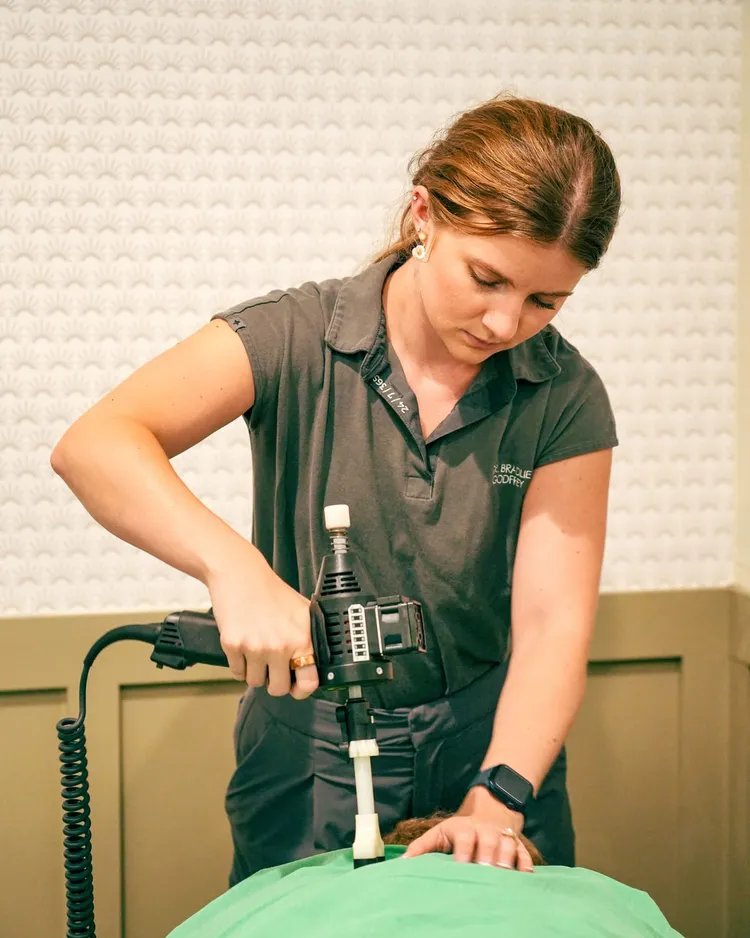
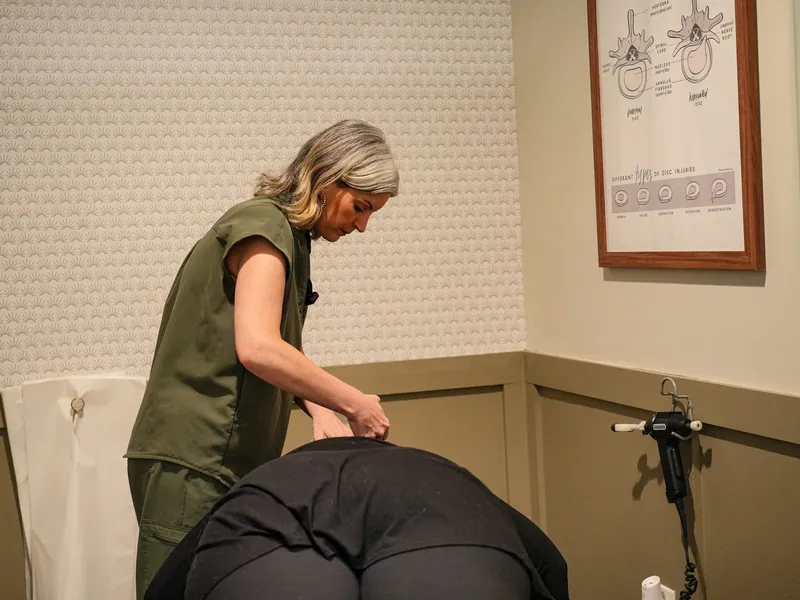
Adjustments restore motion in restricted thoracic joints. Instrument care stays specific. Strength work supports the muscles that hold you up between visits.
- Sitting and breathing are part of the history
- The mid back is treated with the regions it compensates for
- Exercises stay short enough to actually do
A clear path forward
What care looks like
-
01
Listen & map
Your history, daily load, and what you want back come first. We do not start with a protocol.
-
02
Evaluate
Motion, orthopedic, and neurologic tests show what is irritated and what can wait.
-
03
Explain
Findings in plain language, including when imaging or another provider is the better next step.
-
04
Restore
Specific care, then movement you can repeat, with milestones you can see.
Built around real life
A plan you can understand — and follow
-
Specific chiropractic care
Adjustments and instrument work aimed at the joints and nerves the exam actually implicated.
-
Movement that makes sense
A short set of exercises tied to how you sit, lift, walk, or sleep — not a generic packet.
-
Progress you can see
We revisit the same measures so you know whether the plan is working.
No pressure. No long contracts. Just a clear next step.
Getting your life back is the outcome that matters.
“The band between my shoulders stopped being the thing I noticed all afternoon.”
-
Twist
Rotation
How the mid back shares a turn
-
Desk
Sitting tolerance
Where the ache usually returns
-
Breath
Rib motion
When tightness limits a deep breath
Questions about mid-back pain
Why does my mid back hurt if I sit at a desk?
Prolonged flexion loads the same thoracic joints and the muscles between the shoulder blades. The exam shows which segments are not moving and whether posture is keeping them there.
Will I need X-rays or an MRI?
Imaging is used only when your history and exam indicate it. Many people start with a hands-on evaluation. X-rays or an MRI are recommended when we need a clearer look at structure or nerve involvement.
Can I be seen during a flare-up?
Yes. A flare-up is a useful time to be seen, because we can compare how you move now with your baseline and adjust the plan. Call the office and we will do our best to see you promptly.
Do you accept insurance?
We offer a complimentary benefits check before care begins. Bring your insurance card, or send it ahead, and we will review coverage, deductibles, and auto-accident benefits when they apply. No services are rendered without your prior knowledge of your benefits.